Build a Travel Charging Kit You Can Repack in a Minute
Choose compatible chargers and leads, then arrange them so every essential device can charge without upending the bag.
List the devices and plugs you actually need, then run a home trial with only the pouch. Match power and cable ratings and check the destination's outlets and any transport rules.
Start with the devices you will actually bring
A travel cable kit often grows one hurried addition at a time. After enough trips it contains several leads that look useful and one crucial lead that has disappeared. Start with the devices planned for the next journey. Write down how a phone, laptop, watch, headphones and any other essentials recharge or connect. Treat devices that share the same connector as candidates to share a cable. Verify the power and data requirements before making that choice final.
Think through one ordinary day away. Will the computer and phone need to charge at the same time? Does a small device spend part of the day on your wrist, making an overnight charging window valuable? Where will the kit be when you want an emergency top-up? Those circumstances help you decide whether a smaller single-output charger is enough or whether two simultaneous outputs would save real work.
Keep optional connections separate from essential power. A lead that carries a presentation to a screen serves a specific job even if you can charge the computer without it. A cable for moving files might need a data rate that is irrelevant to headphones. Name the job when you put the lead in. That description is more useful during packing than a drawer labeled only with connector shapes.
Match the connector, cable and charger together
Check the required charging method in the device's documentation. USB-C names a physical connector, while devices, cables and power supplies can implement different levels of power and other functions. A connector can fit even when a charger cannot keep up with a laptop during use. Use the original appropriate lead and supply, or supported replacements that meet the relevant ratings. The smallest adapter you can buy should still be suitable for the work you ask of it.
Read the output information for multiport chargers. A device may have more power available when plugged in alone than when another port is active. The distribution can differ by port and combination. Try the two devices you expect to connect at once and see whether each behaves normally. A charger that supplies one claimed output on paper might serve a different set of jobs when a second device shares it.
Look at cable labels and source documentation if power ratings matter. Use a short length where the device stays beside an outlet, and a longer appropriate cable when the outlet is behind a bed or desk. Too much length can tangle in a small pouch, while a very short lead may pull a device off a shelf. Pack a cable in a gentle loop or with a soft tie that can be removed without stressing the connector.
Check the destination and the trip there
Look up the wall socket and electrical supply for each destination, especially when crossing borders. A plug adapter changes the physical connection. It generally does not convert voltage. Compare the charger's marked input range with the local supply and choose an appropriate adapter for the exact socket. Check whether any ground connection required by your equipment can be maintained with the combination.
Facilities vary inside one destination. An airport outlet, a guest room socket and a train charging port may offer different options. Treat an outlet at the seat as a possible convenience rather than the sole way to make the day's plan work. Keep access to the batteries you need for tickets, communication and directions. A properly charged phone and a reliable kit can make a delayed connection easier to manage.
If you take a power bank or spare battery, consult the current rules from the relevant carrier and transport authority before leaving. Details and restrictions can depend on the equipment and how it is carried. Keep any needed markings legible and protect devices against accidental damage according to the guidance. A backup battery is only useful on a trip where it can travel appropriately and where you can reach its cable.
Read any transport guidance close enough to departure to account for changes, particularly if your route uses several carriers. Make a quick screen capture of the official information if it is useful to have when you are offline. Check the power bank's capacity marking rather than relying on a purchase title or an estimate you remember. If you cannot confirm a battery is allowed, travel with a simpler configuration you know meets the requirements. That can mean packing a reliable wall adapter, charging everything beforehand and planning to recharge at the destination. A sensible fallback keeps one unknown accessory from deciding how the whole bag is packed.
Use a small layout with visible empty spots
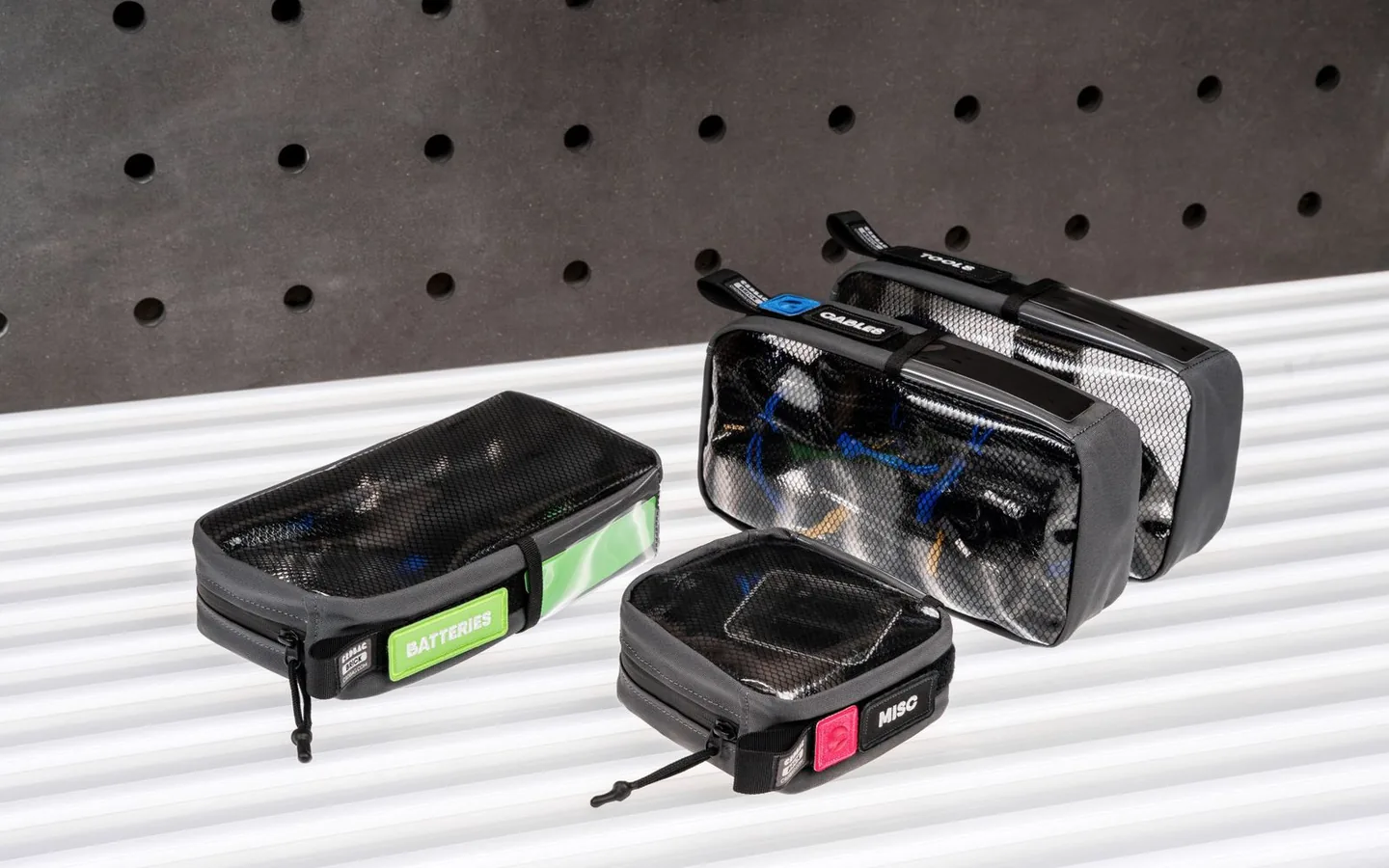
Choose a pouch that opens where you can see its contents. Give commonly used pieces a consistent position. One pocket can hold the wall adapter and another can hold short leads. A small internal sleeve can keep an unusual watch cable or card reader from sliding into the larger compartment. A flat zipper bag may work as well as a fitted organizer if it opens widely enough to see everything.
Label leads that look alike but serve different jobs. A removable tag near the connector can identify the lead you verified for video or higher-power charging. Use labels that stay readable without getting in the way of the plug. A color tie can make it easy to identify the charging cable in dim light. Keep the labeling simple enough that it survives replacement.
Avoid filling every space. A lead borrowed for a meeting should have a clear route back to the pouch. If a large adapter forces everything to be removed whenever you need one cable, change the placement or bag. Pack the essentials where you can reach them without scattering the contents on a public table. The useful test is what happens when you are in a hurry.
Run a night away without leaving home
Put the usual drawer of accessories off limits for one evening. Charge each device from the packed kit in the way you plan to abroad. Test the phone while the laptop is charging. Try the longer lead away from the desk. Check that a spare battery can charge a device and be recharged with the equipment you packed. No more than one full trial is needed to expose many combinations that look supported until they meet.
Check data and video leads too if the trip depends on them. Open a harmless example file or display a test page with the same adapter you intend to carry. Bring a backup only when its duplicate function matters. Two visually identical cables are not useful substitutes if only one supports what you need, so note which one passed each test.
Pay attention to what the kit does when packed out of order. Separate a recently used lead, then return it without looking up where it usually goes. If this proves difficult on a quiet evening, expect it to be slower before checkout. Move pieces until the normal use sequence has an obvious rhythm. A tidy pouch is useful because it gives you confidence that a piece was returned.
Look after chargers and leads along the way
Inspect plugs and cables while packing. Replace damaged pieces or items with signs of wear that make them unreliable. Avoid wrapping a lead tightly around an adapter while it is hot. Allow equipment space and use suitable surfaces as its maker describes. A charger covered in a pile of clothing or balanced where the cable pulls on it deserves a better position.
Use your own suitable charger and a wall outlet when possible. A public charging connector you do not control can work differently from a simple power supply. Keep the phone's usual security and accessory prompts in place. Use a trusted setup for critical tasks instead of responding to an unfamiliar prompt in a rush. A power-only lead or connection may suit a travel kit if it meets the device's charging needs and you have verified it before the trip.
Let one charger remain available if another is unexpectedly in use. A small low-power adapter may handle the most important device while the main charger is busy. This is worthwhile when a phone, an accessible communication aid or a ticket display cannot wait. For a low-stakes trip, carrying one verified arrangement and knowing what you can borrow may be enough.
Repack against a short list and review the kit afterward
Check the charger, essential leads, any travel adapter, backup battery and the one project-specific accessory. Read the list at the outlet where you used the equipment. Adapters are easy to leave behind because their familiar cable has already been pulled out. In a shared room, know which pieces actually belong to you before packing. A visible label can save an awkward exchange at the next stop.
When you return, recharge the reserve battery as appropriate, inspect the leads and remove anything unused that served only that journey. Keep exceptions if they are genuinely hard to replace at the destination. Adjust the default kit after a trip showed where it failed, not simply because the pouch could hold another gadget.
The good kit is one you can recreate by memory and verify by sight. Every device has an intended route to power, unusual accessories have a visible place, and the layout is small enough to check before leaving. A few minutes of use at home makes that quiet confidence possible.